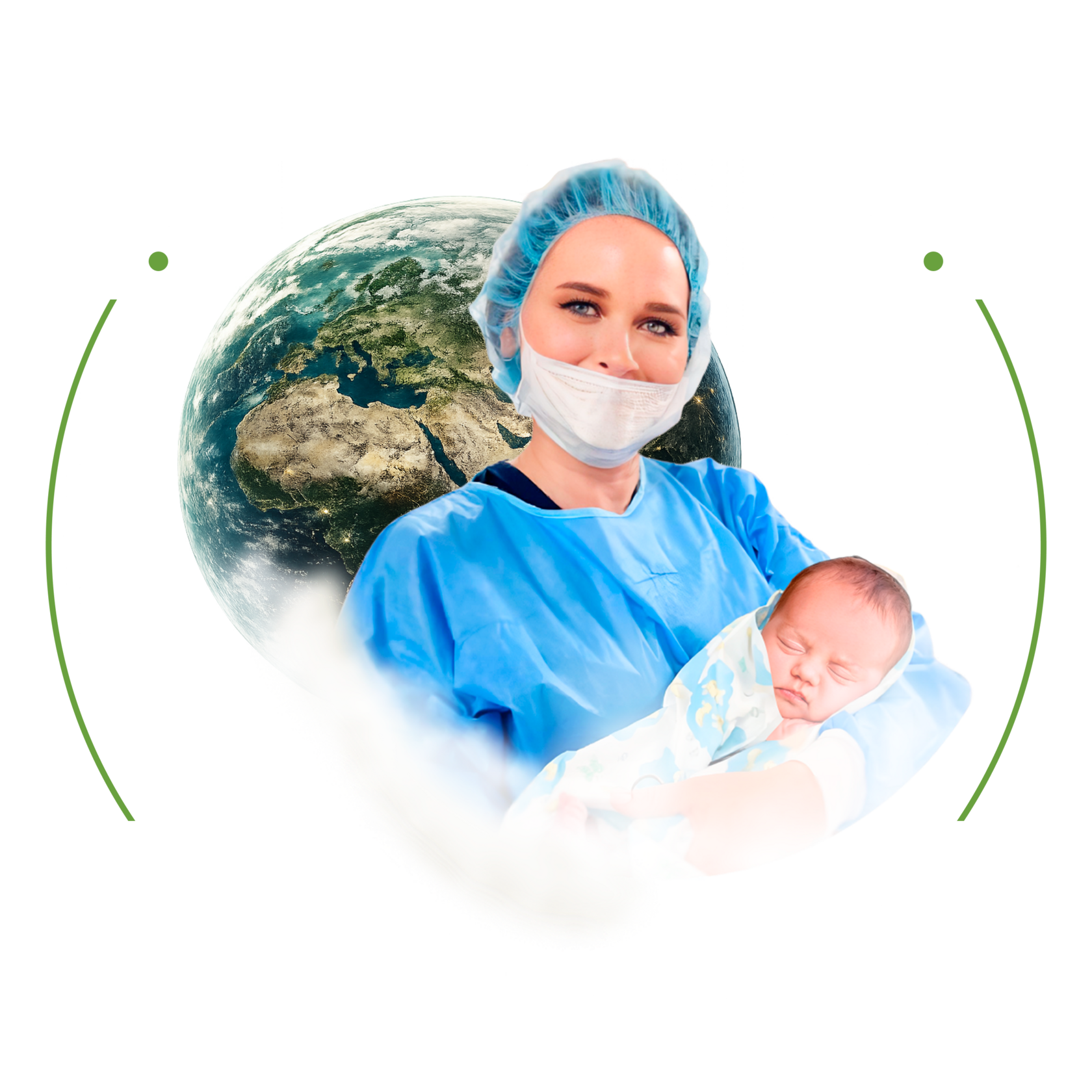
Fifth Mission: Democratic Republic of the Congo
Spring 2026
Ekaterina Glok’s International Medical Mission Has Completed Its Work in the Democratic Republic of the Congo
Fifth Mission: Democratic Republic of the Congo
Spring 2026
Ekaterina Glok’s International Medical Mission Has Completed Its Work in the Democratic Republic of the Congo
Medical Mission
Ekaterina Glok’s International Medical Mission has completed its work in the Democratic Republic of the Congo. From May 1 to 14, Russian doctors and medical specialists worked in Kinshasa and Kisangani, performing surgeries, providing consultations, assisting with childbirth, delivering emergency care, and training local colleagues in modern clinical techniques.
During the mission, the Russian team performed 27 surgeries, provided 556 medical consultations, assisted with three deliveries, and trained 70 healthcare professionals.
The delegation consisted of 10 doctors and medical specialists from various regions of Russia. Their work covered several medical fields, including surgery, pediatric surgery, obstetrics and gynecology, urology, oncology, otorhinolaryngology, pediatrics, diagnostic ultrasound, anesthesiology, and critical care.
A First in Congo: Nerve Transfer Surgery for a Child with Obstetric Brachial Plexus Palsy
One of the mission’s major achievements was the work of Andrey Baytinger, a hand and peripheral nerve surgeon and plastic surgeon from Tomsk.
In Kinshasa, he performed what, according to the host organization, was the first surgery of its kind in the Democratic Republic of the Congo — a nerve transfer procedure on a 2-year-old girl with obstetric brachial plexus palsy, also known as Erb–Duchenne palsy.
Due to complications during childbirth, the child sustained an injury to the nerves of the brachial plexus, resulting in paralysis of the muscles responsible for bending the elbow. To restore arm function, a complex microsurgical reconstruction was performed: a nerve from the rib area was transferred to the shoulder. Such procedures require exceptional precision, as nerves are extremely small in diameter and are sutured using threads thinner than a human hair.
Before the surgery, Russian and Congolese specialists held a multidisciplinary consultation with the child’s parents. The procedure was performed jointly with Professor Anatole Kibadi from the University Hospital of Kinshasa. According to local colleagues and Dr. Lady Yangotikala, such operations had never been performed in Congo before.
Later, Andrey Baytinger performed a similar procedure for the first time in Kisangani on a 7-year-old boy with Erb–Duchenne palsy. Both surgeries not only provided medical care to the children but also served as valuable hands-on training opportunities for local healthcare professionals.
In addition, Andrey Baytinger performed median nerve decompression surgery, conducted neurological consultations, and administered numerous therapeutic nerve blocks for pain management.
Emergency Obstetric Care: Lives Saved
Among the most complex clinical cases encountered by the mission team were obstetric emergencies. Natalia Yakovleva, an obstetrician-gynecologist from Vladivostok, played a significant role in providing emergency care.
A woman was admitted to one of the hospitals in critical condition, suffering from a ruptured uterus, severe pain, and massive hemorrhage. The patient had lost approximately 3 liters of blood. By the time she arrived at the hospital, her baby had already died and was located in her abdominal cavity.
Natalia Yakovleva performed an emergency hysterectomy. The patient also received blood transfusions. Thanks to timely medical intervention, the woman's life was saved.
In addition, Natalia saved a patient suffering from sepsis following a cesarean section, provided gynecological consultations, and treated women with various obstetric and gynecological conditions. She also performed surgical procedures and trained local medical staff in surgical techniques for treating pelvic organ prolapse, which had not previously been performed there. Furthermore, she provided training in various obstetric and gynecological procedures.
The Team’s Work Across Other Medical Specialties
In addition to these clinical cases, the mission’s specialists worked across several medical fields, ranging from neonatology and pediatrics to urology, oncology, abdominal surgery, and otorhinolaryngology.
Ekaterina Glok, mission leader, midwife, and paramedic from Moscow, assisted with childbirth and trained local specialists in practical obstetric care techniques. Particular attention was given to approaches that can be applied in settings with limited access to medical equipment, supplies, and advanced medical care.
Anastasia Kalita, a neonatologist, pediatrician, and neonatal resuscitation instructor from Krasnodar, provided consultations for newborns, young children, and their parents. She participated in pediatric consultations and trained local specialists in neonatal care and newborn resuscitation techniques, which are particularly important during the first minutes of a child’s life.
Kirill Maksimenko, a pediatrician, anesthesiologist, critical care specialist, and diagnostic ultrasound physician from Novosibirsk, performed ultrasound examinations in pediatrics and gynecology, provided pediatric consultations, and participated in comprehensive patient assessments. He also treated parasitic diseases, which are widespread among the local population.
Alexander Ugarov, a urologist from the Moscow Region, provided urological consultations and performed specialized procedures. During the mission, he carried out bladder biopsies, cystostomies, excisions of testicular membranes, and tumor removals, and consulted patients with various urological conditions.
Irina Snytko, Chief Pediatric Surgeon of the Bryansk Region, provided emergency surgical care, performed ultrasound examinations, and operated on children with umbilical and congenital inguinal hernias. Her patients included children as young as four months old. She also surgically treated benign growths under local anesthesia.
Vyacheslav Ivanov, a surgical oncologist from Kemerovo specializing in head and neck tumors, provided oncology consultations and performed cancer-related surgeries. He operated on patients with soft tissue tumors and skin cancer, and performed surgery on a patient with a giant thyroid tumor. He also treated skin conditions in children.
Timirbulat Idiev, an abdominal surgeon from Achkhoy-Martan, Chechen Republic, provided surgical consultations, performed hernia repairs, and carried out postoperative puncture procedures. He also performed the first laparoscopic appendectomy in Kinshasa, sharing his experience with local colleagues during their work together.
Magomed Tataev, an otorhinolaryngologist from Grozny, provided specialized consultations, delivered emergency ENT care, treated patients with ear, nose, and throat conditions, and performed minimally invasive procedures under local anesthesia. Based on his examinations, he determined further treatment plans and arranged referrals for patients requiring specialized care.
Training and Collaboration with Local Doctors
Education was one of the mission’s main priorities. Russian specialists not only provided consultations and performed surgeries but also worked alongside their Congolese colleagues, explaining surgical procedures, reviewing clinical cases, demonstrating diagnostic and surgical techniques, and discussing postoperative patient management.
A total of 70 local healthcare professionals received training.
Particular emphasis was placed on hands-on learning. Training took place in operating rooms, during consultations and ultrasound examinations, through the review of emergency cases, and as part of collaborative patient care.
“For us, it was important not simply to arrive and perform complex surgeries, but to carry them out together with local doctors. In Kinshasa and Kisangani, our specialists performed procedures that had never been carried out here before, saved women in critical condition, operated on children, and consulted hundreds of patients. But the most important outcome is the knowledge and skills that remain with our local colleagues and will continue helping people long after we leave,” said mission leader Ekaterina Glok.
Work in Kinshasa and Kisangani
The mission took place in two cities: Kinshasa and Kisangani. In the capital, the team worked at a medical university and local hospitals, where they performed surgeries, provided consultations, and conducted training activities.
In Kisangani, particular attention was given to patients with limited access to qualified medical care, including people affected by armed conflict near the border with Rwanda and displacement within the region.
Mission participants noted strong interest from the medical community of the Democratic Republic of the Congo. Local specialists actively participated in collaborative work, attended surgeries, discussed clinical cases, and explored opportunities for further cooperation.
During the mission, the Russian team performed 27 surgeries, provided 556 medical consultations, assisted with three deliveries, and trained 70 healthcare professionals.
The delegation consisted of 10 doctors and medical specialists from various regions of Russia. Their work covered several medical fields, including surgery, pediatric surgery, obstetrics and gynecology, urology, oncology, otorhinolaryngology, pediatrics, diagnostic ultrasound, anesthesiology, and critical care.
A First in Congo: Nerve Transfer Surgery for a Child with Obstetric Brachial Plexus Palsy
One of the mission’s major achievements was the work of Andrey Baytinger, a hand and peripheral nerve surgeon and plastic surgeon from Tomsk.
In Kinshasa, he performed what, according to the host organization, was the first surgery of its kind in the Democratic Republic of the Congo — a nerve transfer procedure on a 2-year-old girl with obstetric brachial plexus palsy, also known as Erb–Duchenne palsy.
Due to complications during childbirth, the child sustained an injury to the nerves of the brachial plexus, resulting in paralysis of the muscles responsible for bending the elbow. To restore arm function, a complex microsurgical reconstruction was performed: a nerve from the rib area was transferred to the shoulder. Such procedures require exceptional precision, as nerves are extremely small in diameter and are sutured using threads thinner than a human hair.
Before the surgery, Russian and Congolese specialists held a multidisciplinary consultation with the child’s parents. The procedure was performed jointly with Professor Anatole Kibadi from the University Hospital of Kinshasa. According to local colleagues and Dr. Lady Yangotikala, such operations had never been performed in Congo before.
Later, Andrey Baytinger performed a similar procedure for the first time in Kisangani on a 7-year-old boy with Erb–Duchenne palsy. Both surgeries not only provided medical care to the children but also served as valuable hands-on training opportunities for local healthcare professionals.
In addition, Andrey Baytinger performed median nerve decompression surgery, conducted neurological consultations, and administered numerous therapeutic nerve blocks for pain management.
Emergency Obstetric Care: Lives Saved
Among the most complex clinical cases encountered by the mission team were obstetric emergencies. Natalia Yakovleva, an obstetrician-gynecologist from Vladivostok, played a significant role in providing emergency care.
A woman was admitted to one of the hospitals in critical condition, suffering from a ruptured uterus, severe pain, and massive hemorrhage. The patient had lost approximately 3 liters of blood. By the time she arrived at the hospital, her baby had already died and was located in her abdominal cavity.
Natalia Yakovleva performed an emergency hysterectomy. The patient also received blood transfusions. Thanks to timely medical intervention, the woman's life was saved.
In addition, Natalia saved a patient suffering from sepsis following a cesarean section, provided gynecological consultations, and treated women with various obstetric and gynecological conditions. She also performed surgical procedures and trained local medical staff in surgical techniques for treating pelvic organ prolapse, which had not previously been performed there. Furthermore, she provided training in various obstetric and gynecological procedures.
The Team’s Work Across Other Medical Specialties
In addition to these clinical cases, the mission’s specialists worked across several medical fields, ranging from neonatology and pediatrics to urology, oncology, abdominal surgery, and otorhinolaryngology.
Ekaterina Glok, mission leader, midwife, and paramedic from Moscow, assisted with childbirth and trained local specialists in practical obstetric care techniques. Particular attention was given to approaches that can be applied in settings with limited access to medical equipment, supplies, and advanced medical care.
Anastasia Kalita, a neonatologist, pediatrician, and neonatal resuscitation instructor from Krasnodar, provided consultations for newborns, young children, and their parents. She participated in pediatric consultations and trained local specialists in neonatal care and newborn resuscitation techniques, which are particularly important during the first minutes of a child’s life.
Kirill Maksimenko, a pediatrician, anesthesiologist, critical care specialist, and diagnostic ultrasound physician from Novosibirsk, performed ultrasound examinations in pediatrics and gynecology, provided pediatric consultations, and participated in comprehensive patient assessments. He also treated parasitic diseases, which are widespread among the local population.
Alexander Ugarov, a urologist from the Moscow Region, provided urological consultations and performed specialized procedures. During the mission, he carried out bladder biopsies, cystostomies, excisions of testicular membranes, and tumor removals, and consulted patients with various urological conditions.
Irina Snytko, Chief Pediatric Surgeon of the Bryansk Region, provided emergency surgical care, performed ultrasound examinations, and operated on children with umbilical and congenital inguinal hernias. Her patients included children as young as four months old. She also surgically treated benign growths under local anesthesia.
Vyacheslav Ivanov, a surgical oncologist from Kemerovo specializing in head and neck tumors, provided oncology consultations and performed cancer-related surgeries. He operated on patients with soft tissue tumors and skin cancer, and performed surgery on a patient with a giant thyroid tumor. He also treated skin conditions in children.
Timirbulat Idiev, an abdominal surgeon from Achkhoy-Martan, Chechen Republic, provided surgical consultations, performed hernia repairs, and carried out postoperative puncture procedures. He also performed the first laparoscopic appendectomy in Kinshasa, sharing his experience with local colleagues during their work together.
Magomed Tataev, an otorhinolaryngologist from Grozny, provided specialized consultations, delivered emergency ENT care, treated patients with ear, nose, and throat conditions, and performed minimally invasive procedures under local anesthesia. Based on his examinations, he determined further treatment plans and arranged referrals for patients requiring specialized care.
Training and Collaboration with Local Doctors
Education was one of the mission’s main priorities. Russian specialists not only provided consultations and performed surgeries but also worked alongside their Congolese colleagues, explaining surgical procedures, reviewing clinical cases, demonstrating diagnostic and surgical techniques, and discussing postoperative patient management.
A total of 70 local healthcare professionals received training.
Particular emphasis was placed on hands-on learning. Training took place in operating rooms, during consultations and ultrasound examinations, through the review of emergency cases, and as part of collaborative patient care.
“For us, it was important not simply to arrive and perform complex surgeries, but to carry them out together with local doctors. In Kinshasa and Kisangani, our specialists performed procedures that had never been carried out here before, saved women in critical condition, operated on children, and consulted hundreds of patients. But the most important outcome is the knowledge and skills that remain with our local colleagues and will continue helping people long after we leave,” said mission leader Ekaterina Glok.
Work in Kinshasa and Kisangani
The mission took place in two cities: Kinshasa and Kisangani. In the capital, the team worked at a medical university and local hospitals, where they performed surgeries, provided consultations, and conducted training activities.
In Kisangani, particular attention was given to patients with limited access to qualified medical care, including people affected by armed conflict near the border with Rwanda and displacement within the region.
Mission participants noted strong interest from the medical community of the Democratic Republic of the Congo. Local specialists actively participated in collaborative work, attended surgeries, discussed clinical cases, and explored opportunities for further cooperation.

Mission Members
